What is NAD?
NAD stands for Nicotinamide Adenine Dinucleotide. It is a naturally occurring coenzyme found in every cell of the body and plays an important role in cellular energy production.
28 May, 2026 | Jabbar Ali - MPharm

You may have noticed more people talking about metabolism, cellular health, energy production and "healthy ageing" recently. Terms like mitochondrial function and NAD are appearing more frequently in wellness conversations, podcasts and health articles. But for many people, it is still not entirely clear what any of it actually means.
And honestly, the language around it can sometimes feel unnecessarily complicated.
If you have been feeling more tired than usual, struggling with recovery, noticing changes in your energy levels or simply becoming more interested in supporting your long-term wellbeing, understanding the role of cellular health can be genuinely useful. Not because there is one "magic solution" to aging or energy, but because metabolism and wellbeing begin much deeper than most people realise: at the level of the cell.
One of the molecules increasingly discussed within this area is NAD.
In this article, we'll explain what NAD is, how it supports cellular energy production, why mitochondria matter, and why metabolic health is about much more than calories alone.
If you are interested in broader metabolic wellness and healthy lifestyle support, our iQ Doctor clinical team is here to help you explore evidence-based options at your own pace.
NAD stands for Nicotinamide Adenine Dinucleotide.
It is a naturally occurring coenzyme found in every cell of the body. In simple terms, NAD helps cells convert nutrients from food into usable energy. Without it, many of the processes your body relies on every day simply could not function properly.
This includes everything from energy production, cellular repair processes and metabolic signalling to simple communication between cells.
Although the name sounds highly scientific, the concept itself is actually quite straightforward. Your body needs constant access to energy to carry out everyday functions, and NAD plays an important role in helping make that energy available at a cellular level.
Importantly, NAD is not a stimulant. It is not the same as caffeine or "quick energy." Instead, it is involved in the underlying biological processes that support how cells use and transfer energy in the first place.
That distinction matters.
When people hear the word "energy," they often think about feeling awake, feeling motivation to get out and do something and of course, the feeling energetic is the complete opposite to feeling exhausted.
But biologically, energy production is happening continuously inside your cells whether you are thinking about it or not.
Every heartbeat, muscle movement, hormone signal and repair process requires cellular energy. The body is constantly converting nutrients into fuel to support these functions.
This is where metabolism begins.
Metabolism is not simply about "burning calories." It refers to the thousands of chemical processes taking place throughout the body to maintain life and function.
These include:
And much of that process depends on structures inside your cells called mitochondria.
You may have heard mitochondria described as the "powerhouse" of the cell.
While that phrase gets repeated often, it is actually a useful way of thinking about them.
Mitochondria are tiny structures inside cells responsible for producing most of the energy your body uses. They take nutrients and oxygen and help convert them into a form of energy your cells can actually use.
This process is happening all the time.
Some tissues, such as muscles, the brain and the heart, require particularly large amounts of energy. That means they rely heavily on healthy mitochondrial function.
So, when you hear people talking about recovery, physical resilience, energy production, metabolic efficiency and even cellular wellness, they are often directly referring to mitochondrial health too and NAD plays a central role within many of these mitochondrial processes.
NAD helps transport electrons during cellular energy production. While the biochemistry behind this is complex, the key point is that NAD is involved in helping cells produce usable energy efficiently.
Without enough NAD available, energy production processes become less efficient.
Researchers are particularly interested in how NAD levels may change over time and how this relates to:
This does not mean NAD "reverses aging" or guarantees improved health outcomes. Those kinds of claims are oversimplified and often very misleading. But it does explain why NAD has become an increasing focus within broader healthy aging and metabolic wellness conversations.
Many people notice changes in their energy, recovery and metabolism as they get older.
You might find you:
These experiences are extremely common and often reflect broader lifestyle pressures such as poor sleep, chronic stress, reduced movement as we get older, busy schedules or it’s just that our bodies are not getting enough regular nutrition.
But age-related changes in metabolism and cellular processes can also play a role and this is sometimes referred to as "metabolic aging."
That phrase does not mean the body is "failing." It simply reflects the fact that metabolic efficiency and recovery processes naturally change over time.
Lifestyle, stress levels, movement, sleep quality and overall health all influence how noticeable these changes feel.
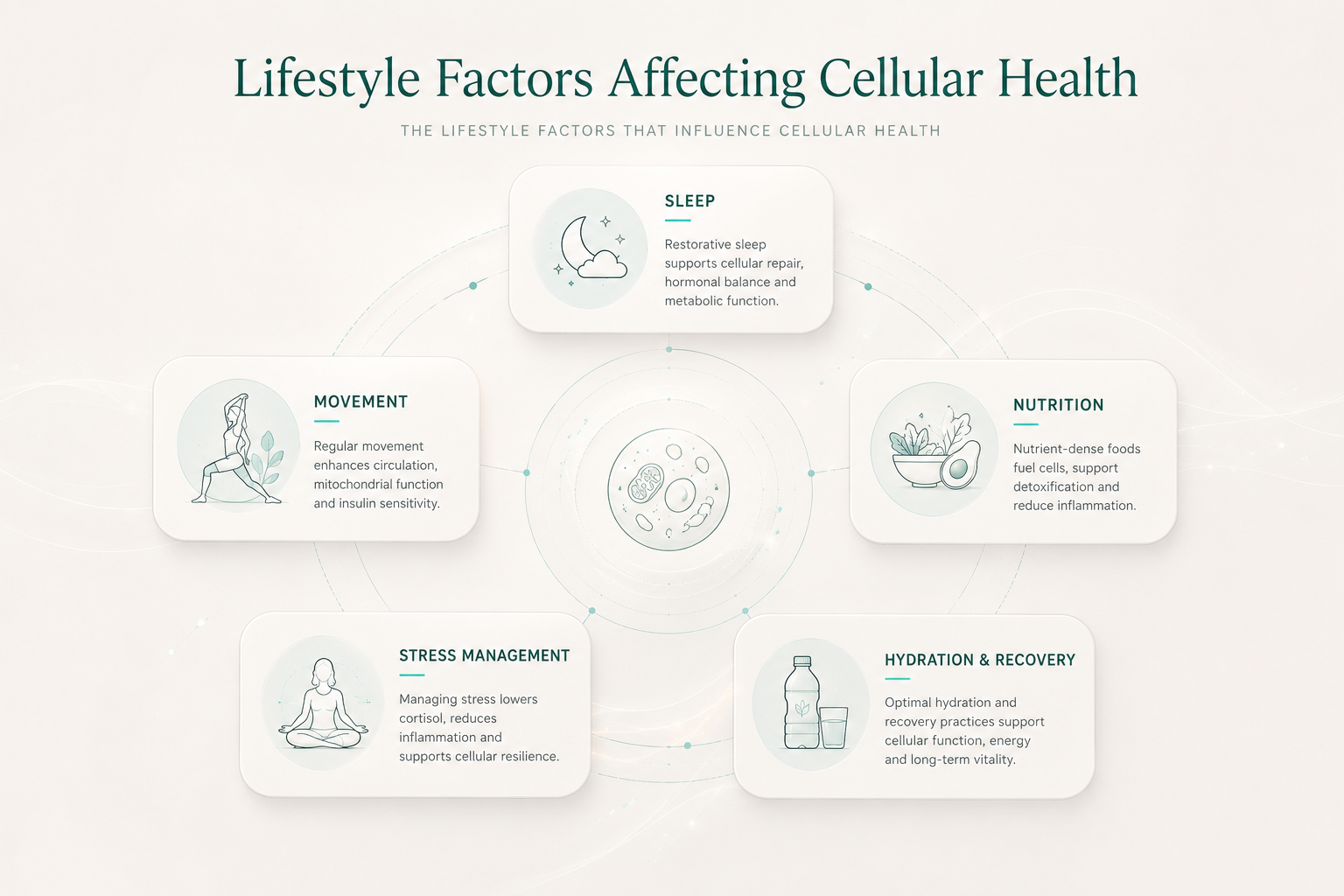
One of the most important things to understand is that metabolic health is never about one single molecule, food or supplement.
Cellular wellbeing is influenced by the overall environment you create for your body.
This includes:
Sleep
Sleep is one of the most important recovery processes the body has. Poor sleep affects your hormonal balance and how you respond to stress. It will also have a bearing on how often you feel hungry during the day as well as how you can produce more energy. It will even have an effect on how well you recover from an illness or an injury.
Movement
By moving around regularly, you will improve your:
This does not mean extreme exercise. In fact, consistent walking and resistance training often provide significant long-term benefits.
Nutrition
Cells require nutrients to function effectively. When we say nutrients, we mean foods which contain protein, healthy fats such as fatty fish, foods with high content fibre including vitamins and minerals. It is important to remember that even undereating, restrictive dieting and inconsistent nutrition can sometimes place additional stress on the body rather than supporting it.
Stress management
Chronic stress affects far more than mood. Persistently elevated stress hormones can also influence the same: sleep, appetite, recovery blood sugar and energy levels. This is the reason why burnout often feels deeply physical, and not just emotional.
Hydration and recovery
It’s also important to remember to drink plenty of water. Even the mildest dehydration can affect your:
Small daily habits matter more than dramatic short-term interventions.
Interest in NAD has grown alongside wider conversations around much more broader topics such as longevity, healthy aging and metabolic wellness. People are increasingly interested in understanding not just lifespan, but "healthspan" how well they feel as they age.
That shift has helped bring topics like Mitochondria, metabolic flexibility, cellular energy and biological aging into more mainstream discussion.
Yet, at the same time, it is important to stay grounded and evidence-led. There is still a great deal researchers are continuing to explore about cellular aging and metabolism.
While NAD is a legitimate area of scientific interest, it should not be positioned as a miracle solution or shortcut to wellbeing.
The most balanced approach is understanding it as:
One reason people become frustrated with metabolism discussions is because many health messages are oversimplified. Real metabolic health is influenced by sufficient levels of sleep, regulating our levels of stress, our hormones, muscle mass, overall levels of nutrition, activity levels and so on. This is why two people can follow the same routine and still feel very different physically. It is also why sustainable wellbeing usually comes from improving overall habits rather than chasing extreme interventions.
Understanding cellular health can be empowering. But it should always sit within the bigger picture of your general wellbeing.
Usually, it is people who feel confused about why their body feels different now than it used to.
If you have found yourself thinking:
Learning about metabolism and cellular health can provide useful context.
Not because everything comes down to NAD or mitochondria alone, but because it helps explain that wellbeing is shaped by many interconnected systems working together.
That perspective often brings reassurance as much as information.
NAD stands for Nicotinamide Adenine Dinucleotide. It is a naturally occurring coenzyme found in every cell of the body and plays an important role in cellular energy production.
NAD helps support metabolic processes involved in converting nutrients into usable cellular energy. It is also involved in mitochondrial function and broader cellular signalling processes.
NAD is involved in how cells produce energy, but it is not a stimulant like caffeine. Research into NAD and cellular metabolism is ongoing, and wellbeing is influenced by many lifestyle factors together.
Mitochondria are structures inside cells responsible for producing most of the body’s usable energy. They are often referred to as the "powerhouse" of the cell.
Yes. Metabolic processes naturally change over time and can be influenced by sleep, stress, hormones, movement, nutrition and overall lifestyle.
Absolutely. Sleep quality, physical activity, nutrition, hydration and stress management all influence metabolic wellbeing and cellular function.
No. Supplements should be viewed as supportive tools within a broader lifestyle approach, not replacements for foundational wellbeing habits.
Energy, metabolism and wellbeing are rarely shaped by one single factor.
They reflect the combined influence of sleep, movement, stress, hormones, nutrition, recovery and cellular health working together over time.
NAD has become an increasingly important topic because it plays a role within those deeper cellular energy processes. But the most effective approach to metabolic wellbeing is rarely about chasing shortcuts. It is about understanding how the body functions as a whole and creating sustainable habits that support it long-term.
At iQ Doctor, we believe health conversations should feel evidence-based, balanced and human. Not driven by hype, fear or unrealistic promises.
"People are becoming far more interested in understanding how energy, recovery and metabolism work beneath the surface, and that's a positive shift. But it's important these conversations stay grounded in evidence and realistic expectations. Metabolic health is shaped by the bigger picture of lifestyle, recovery and overall wellbeing, not one single intervention."
If you'd like to explore broader support around metabolic wellbeing, healthy lifestyle change or preventative health, our UK-based clinical team is here when you're ready.
Clinically reviewed by Omar El-Gohary, Superintendent Pharmacist
Date of review: 11 May 2026.
Want to talk more about your health needs? Speak to our team now


This page has been written by a registered UK pharmacist and reviewed by our clinical team to ensure it is accurate, clear and reflects current clinical guidance.
Last medically reviewed: 28 May, 2026
Last updated: 30 September, 2026