1. What exactly is metabolic health?
Metabolic health refers to how well your body manages energy, including blood sugar, insulin, hormones, and how you store or burn fuel. It’s about internal function, not body size or appearance.
07 May, 2026 | Jabbar Ali - MPharm
Reviewed by Omar El-Gohary, Superintendent Pharmacist | IQ Doctor Clinical Team
If you’ve been feeling “off” lately, more tired than usual, hungrier than you expect, craving sugar, gaining weight around your middle, or just feeling like your body isn’t responding the way it used to, it could be your metabolic health, not your motivation..
Metabolic health isn’t about being thin, being fit, or “burning calories efficiently”. It’s about how your body regulates energy, hormones, blood sugar, appetite and mood behind the scenes, the systems you don’t see, but definitely feel.
Once you understand how these systems work, so much of your everyday experience suddenly starts to make sense.
This article explains metabolic health in clear, human terms, not judgment, not jargon, so you can understand what your body has been trying to tell you.
Put simply, metabolic health refers to how effectively your body manages energy, from the moment you eat, to how you store fuel, to how you burn it hours later.
Someone with good metabolic health typically has:
But metabolic health is not about body size.
You can be a “healthy weight” and still have poor metabolic health, especially if insulin resistance is developing quietly in the background. You can also carry extra weight but still have stable metabolic markers in early stages.
Weight is not the same as health. Metabolic health is about function, not appearance.
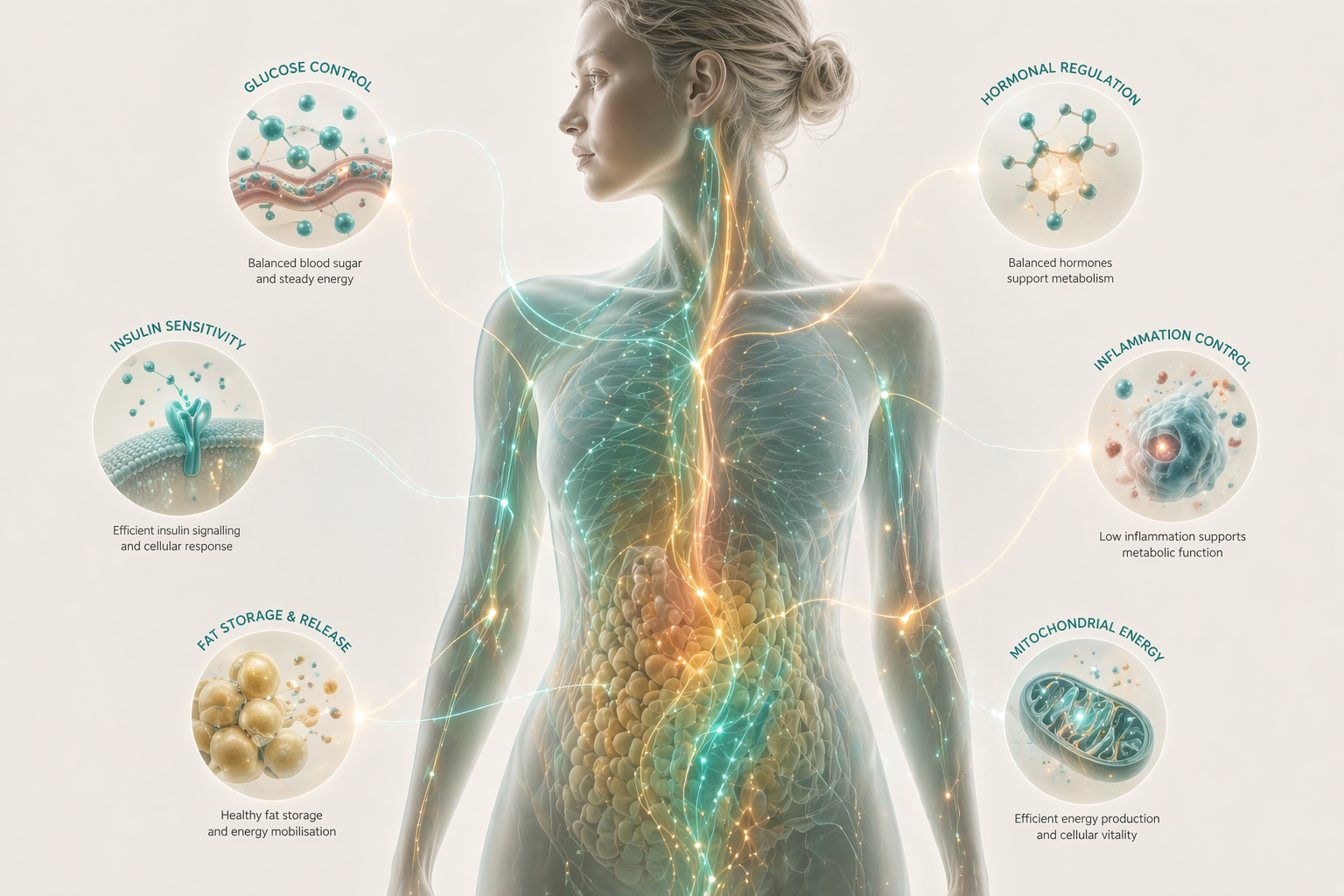
Your metabolism is not one switch; it’s a network of systems that talk to each other all day long. When even one gets overloaded, tired or disrupted, the whole picture can change. Let’s break it down in a way that feels human and relatable.
Your blood sugar system: the root of your daily energy patterns
Think of your blood sugar as your body’s main energy dial. When this system is stable, you feel steady and focused. You are more likely to feel happier and not hungry between meals.
However, when it swings, you feel it quickly. For example, you may feel hungry soon after eating, shaky, irritable or anxious if you haven’t eaten something. You also might find your energy crashes around mid-afternoon and crave quick carbs for relief.
This doesn’t mean you’re “bad at eating”.
It means insulin, the hormone that controls blood sugar, is working overtime.
Over long periods of stress, poor sleep, or frequent sugar spikes, your cells can become less sensitive to insulin. This pattern, called insulin resistance, can appear years before you ever see a blood sugar result go “out of range”.
It often shows up first as feelings:
These are early signals, and they’re useful ones.
Your fat metabolism: how your body decides what to burn
Your body is always choosing whether to burn sugar or burn fat. When metabolism is healthy, it can switch between them easily.
But as insulin resistance develops or hormones shift, you might feel as if your tummy is puffy or bloated and losing weight is not as easy as it used to be. Or, you simply feel like your body isn’t working with you anymore.
This is not about willpower or discipline. It’s about signalling. Your body literally gets confused about where to store energy and how to use it. And that’s incredibly common.
Your hormones: the messengers controlling hunger, mood and energy
Your hormones, including insulin, cortisol, thyroid hormones, leptin, ghrelin and sex hormones, shape your metabolism more than any diet plan ever could.
When they’re balanced:
When they’re disrupted through stress, ageing, sleep disruption, gut imbalance or metabolic strain, everything feels harder.
You might notice stronger cravings, mood swings, disrupted sleep at night or emotional eating patterns.
And again, none of this is your fault.
You’re not lacking discipline. Your hormones are sending mixed messages.
Your mitochondria: the engines powering everything
Inside your cells are tiny “power stations” called mitochondria. These convert the food you eat into the energy you actually feel.
When they’re working well, you wake up feeling rested and your brain feels clearer. Your movements throughout the day feel easier and you feel alert even in the afternoons.
When they aren’t working, that’s when you might feel flat, your concentration might drop and you could find yourself reaching for caffeine or sugar as a result.
Many people describe this as feeling “older than they are”. Often, it’s an early metabolic signal.
Metabolic health affects your weight regulation, cravings, mood, stress response, energy, sleep, hormones and long-term disease risk.
Poor metabolic health can increase the chances of developing illnesses such as type 2 diabetes, fatty liver disease, chronic fatigue and cardiovascular-related disease.
But here’s the hopeful part:
Metabolic health is adaptable.
It can improve.
Your body wants to regain balance, and understanding what’s happening is the first big step to improvement.
Want to discuss further?
If you'd like to explore clinically supported weight loss treatment, our UK-based clinical team is here. No judgement. No pressure. Just support designed around your health, symptoms and goals.
A clinician will never judge how hard you’re trying. They will simply look at how your body is working on the inside by checking things like your blood sugar, insulin levels, cholesterol, blood pressure, waist size, and how your liver and thyroid are functioning.
When these results are put together, they can show a very clear picture of how healthy your metabolism is, often long before any real health problems appear.
Metabolic health isn’t all-or-nothing but it can move through stages from 1 to 5:
Most people live in stages 2–3 for years without actually realising it. Not because they’re ignoring anything, but because no one explained the early signs.
Ready when you are
If you'd like to explore clinically supported weight loss treatment, our UK-based clinical team is here. No judgement. No pressure. Just support designed around your health, symptoms and goals.
Insulin resistance often develops when your stress stays higher for longer or you find your sleep becomes irregular. People find that their movement reduces and simple meals spike blood sugar level and you feel hungrier than you feel you should be or crave sugary foods in the evenings. So, how these things feel in your body aren’t that dramatic. They are more subtle and cumulative.
These are just early warnings, not moral failings.
Your body isn’t broken. It’s asking for support.
Cravings are often seen as a lack of willpower, but clinically they can tell us a lot about what’s happening in your body.
You're more likely to want sugary or high-carb foods when your blood sugar is rising and falling quickly, your insulin levels are high, or your stress hormone cortisol is elevated.
These shifts are much more likely when you’re stressed, haven’t slept well, your hormones are changing, or you haven’t eaten enough protein or fibre to keep you steady.
Your body is trying to bring itself back into balance. Cravings aren’t a failure, they’re feedback.
“Metabolic health is often misunderstood as a question of weight, when in reality it’s about how well your body regulates energy, insulin and hormones. Many patients tell us they felt ‘something was wrong’ years before a blood test showed a change, and they’re right. Your body gives you signals. When you understand them, everything becomes clearer.”
- Abdul Jabbar, Clinical Lead, IQ Doctor
Your metabolic health shapes how you feel in your body every day: your energy, your appetite, your emotional resilience, your weight, your cravings, your clarity.
When something shifts, it’s not because you’ve done something wrong.
It’s because internal systems you were never taught about are changing.
Understanding those systems is the first step toward feeling like yourself again.
If you’d like help exploring what your symptoms might mean, our UK-based clinical team can guide you: kindly, clearly, and without judgement.
Metabolic health refers to how well your body manages energy, including blood sugar, insulin, hormones, and how you store or burn fuel. It’s about internal function, not body size or appearance.
Yes. Many people with a healthy BMI still experience insulin resistance, fatigue, cravings, or blood sugar swings. Weight alone doesn’t reflect metabolic function.
Common early signs include tiredness after meals, frequent hunger or cravings, low morning energy, mood swings, difficulty losing belly fat, mid-afternoon crashes, and feeling “off” despite a normal diet.
Insulin resistance often develops gradually due to stress, poor sleep, hormonal changes, frequent blood sugar spikes, reduced movement, inflammation, ageing, or family history.
Sugar cravings often come from biological signals, not lack of discipline. Blood sugar swings, high insulin, stress, poor sleep, or hormonal fluctuations can all intensify cravings.
Hormones and blood sugar regulation directly influence mood stability, emotional resilience, mental clarity, and how energised or fatigued you feel after meals or throughout the day.
Yes. Insulin resistance and hormonal shifts can encourage fat storage around the abdomen, even without major changes in eating or exercise habits.
Clinicians typically look at fasting glucose, fasting insulin, HbA1c, cholesterol markers, liver enzymes, blood pressure, thyroid hormones, and waist measurement to understand how well your metabolism is functioning.
Metabolic health is adaptable. Improvements in sleep, stress, nutrition, movement, and blood sugar balance can help restore healthier metabolic function over time.
No. These experiences are biological signals, not personal failures. Your body is communicating that internal systems need support, and understanding these signals is the first step to change.


This page has been written by a registered UK pharmacist and reviewed by our clinical team to ensure it is accurate, clear and reflects current clinical guidance.
Last medically reviewed: 07 May, 2026
Last updated: 07 May, 2026