Q: What causes hair loss in women?
Hormones, stress, genetics, illnesses, nutritional deficiencies and rapid weight changes can all trigger hair thinning.
14 May, 2026 | Jabbar Ali - MPharm
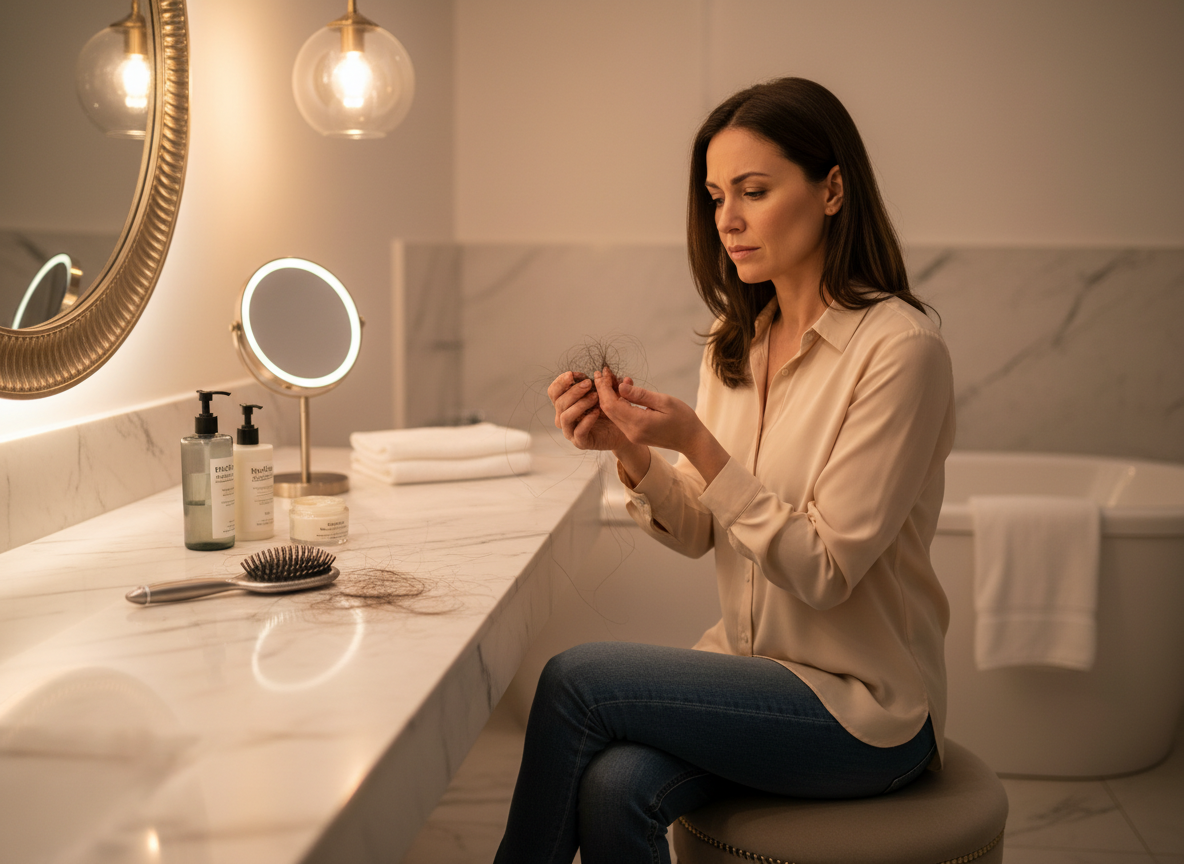
If you’ve noticed more hair in the shower drain, on your pillow, or coming out when you run your hand through it, it can feel personal, almost like something is changing without your permission.
You might find yourself brushing your hair more gently, inspecting your parting in the mirror, or trying hairstyles that hide the areas you’re worried about. And underneath it all, there’s often that quiet question: Is this going to get worse?
If that sounds familiar, you’re not alone. And you’re not imagining it. Hair changes can affect your confidence, your mood, your self-image, and how you feel day to day. When something that feels tied to your identity starts to shift, it’s completely normal to want answers you can trust.
In this article, we'll explore what might be causing your hair loss, what’s normal, what isn’t, how treatment works, and when it’s the right time to get support, without judgement, pressure or confusing medical jargon.

You might expect hair to thin gradually with age, but when it starts happening earlier (or more noticeably) than you expected, it can feel unsettling. One day you’re getting ready without a second thought, and then suddenly you’re noticing a scalp where you didn’t see it before, or your ponytail feels smaller, or your parting looks wider in certain lighting.
You might find yourself:
Female hair loss is far more common than most people realise. The difference is that women rarely talk about it. You hear about men losing their hair all the time, there’s almost a cultural script for it. But when it happens to women, it often happens in silence. That silence makes it easy to feel like you’re dealing with something unusual or embarrassing.
You deserve answers that make sense. And you deserve to know that this is something clinicians see every single day; something that has causes, treatments, and more importantly, solutions.
Hair doesn’t fall out for one single reason. It’s usually a combination of internal changes and how your hair follicles respond over time. Understanding the “why” behind your hair loss is the first step toward choosing the right treatment and regaining a sense of control.
Hormonal changes
Hormones have a powerful influence on hair growth. You might notice thinning during certain times in your life like the perimenopause, when there are changes in your thyroid or if you have recently stopped or have switched contraceptives. Hormonal fluctuations can also shorten the hair growth cycle or increase shedding temporarily. These changes are extremely common and often reversible once your hormones have stabilised.
Stress and emotional strain
Stress doesn’t just affect your mind; it affects your body. When you’ve been through a stressful life event or a prolonged period of pressure, your hair can respond months later by shedding more than usual. This is known as telogen effluvium. It can feel dramatic, but it’s usually temporary once the trigger settles.
Weight loss
If you’ve recently lost weight (whether intentionally or not) your body may temporarily prioritise essential systems over hair growth. This can lead to increased shedding that typically resolves once your body rebalances.
If you want to understand how weight loss treatment options work, you can read our guide to iqdoctor.co.uk or learn iqdoctor.co.uk.
Illness or nutritional changes
Iron deficiency, low B12 levels, crash dieting, low protein intake, or illnesses with high fevers can all affect hair growth. Many of these causes are treatable once identified.
Genetics
Female-pattern hair loss (androgenetic alopecia) is one of the most common causes of gradual thinning. You might notice:
This type of hair loss is treatable and responds well to long-term, consistent management.
Why this matters
None of these causes are your fault. And you’re not “doing something wrong.” Hair loss is a biological response, not a personal failure. Understanding the reason behind your symptoms is the key to finding something that genuinely helps you feel more like yourself again.
Hair loss isn’t just physical, it can be a very deeply emotional experience. You might feel frustrated, self-conscious, or confused about what’s happening. You might notice yourself zooming in on photos, avoiding certain angles, or using more hair products in an attempt to create thickness.
You might notice:
Some days you might feel okay. Other days, seeing a handful of shed strands can feel like too much. These emotions are not superficial at all, they’re a natural response to seeing changes in something that’s been part of your identity for your whole life.
So, remember, you are not overreacting. And you’re not the only one who feels this way.
It’s normal to shed between 50 and 100 hairs a day. It’s normal for shedding to fluctuate seasonally, or during illness, hormonal changes or stress. It’s also normal for hair to cycle through a growth phase, a resting phase and a shedding phase.
However, it is important to recognise when things fall outside “normal”.
You might need support if you find you have been shedding more hair for several months than normal. You may have noticed that your parting is getting wider or your ponytail feels noticeably thinner than usual. This is when you might find your hair texture has changed, and it might feel finer, weaker or just less dense than usual.
Hair loss is treatable for many women, especially when you address the cause early.
There are options. These are real, clinically supported options that can help stimulate regrowth, slow thinning and improve the overall density of your hair.
Topical Minoxidil
Minoxidil is one of the most evidence-backed treatments for female hair loss. It works by improving blood flow to your hair follicles, as well as extending the growth phase of your hair cycle thus providing an environment that supports thicker, longer strands.
The good news is that many women begin noticing improvements in thickness and density within 3-6 months of consistent use.
If you want to understand how treatment options work, you can read our guide to iqdoctor.co.uk or learn more at iqdoctor.co.uk.
Addressing underlying triggers
Before you are prescribed Minoxidil, your clinician might explore other areas which could point to hair loss. He or she may want to test your:
Treating the underlying issue often reduces shedding significantly.
Gentle hair and scalp care
It is possible to help reduce the risk of hair loss in everyday living. For example, people often find reducing certain activities such as heating styling and switching to using gentle shampoos will help keep strands for longer. Avoiding tight hairstyles can also help support scalp health. Even small changes can make a meaningful difference over time.
Nutrition
Hair is made of protein. If you’re low in protein, iron, B-vitamins, essential fats or calories, your hair can become weaker or shed more easily.
Why personalised care matters
There is no one-size-fits-all approach to female hair loss. What helps most is understanding the specific cause, because the right treatment depends on the right diagnosis.
If you're exploring clinically supported options for hair loss, iQ Doctor offers personalised assessments and evidence-based treatments designed to support both regrowth and confidence.
If you’ve been losing more hair for several months, noticing thinning around your parting, or feeling distressed by the changes you’re seeing, it’s worth speaking to a clinician not because something serious is necessarily wrong, but because you don’t need to figure this out by yourself.
Seek support if:
Female hair loss is treatable. And you deserve support that understands the emotional side as much as the physical.
Hormones, stress, genetics, illnesses, nutritional deficiencies and rapid weight changes can all trigger hair thinning.
Some causes, like stress-related shedding, often reverse naturally. Others, such as female-pattern hair loss, can be improved or slowed with treatments like Minoxidil.
Yes. Stress can disrupt your hair growth cycle, triggering a shedding response known as telogen effluvium.
Most women notice improvement within 3-6 months of consistent treatment.
“Hair loss can be deeply unsettling, and it’s understandable to feel worried when something so visible begins to change. From a clinical perspective, the most important step is understanding the underlying cause. Once we identify what your hair follicles are responding to, whether hormonal shifts, stress, nutritional factors or genetics, we can choose a treatment pathway that genuinely supports regrowth. That clarity often brings relief in itself, because it turns something frightening into something manageable, and gives you back a sense of control over your health.”


This page has been written by a registered UK pharmacist and reviewed by our clinical team to ensure it is accurate, clear and reflects current clinical guidance.
Last medically reviewed: 14 May, 2026
Last updated: 18 September, 2026