1. How quickly does daridorexant work?
Most people notice improved sleep within the first few nights, though full effects may take a week or more.
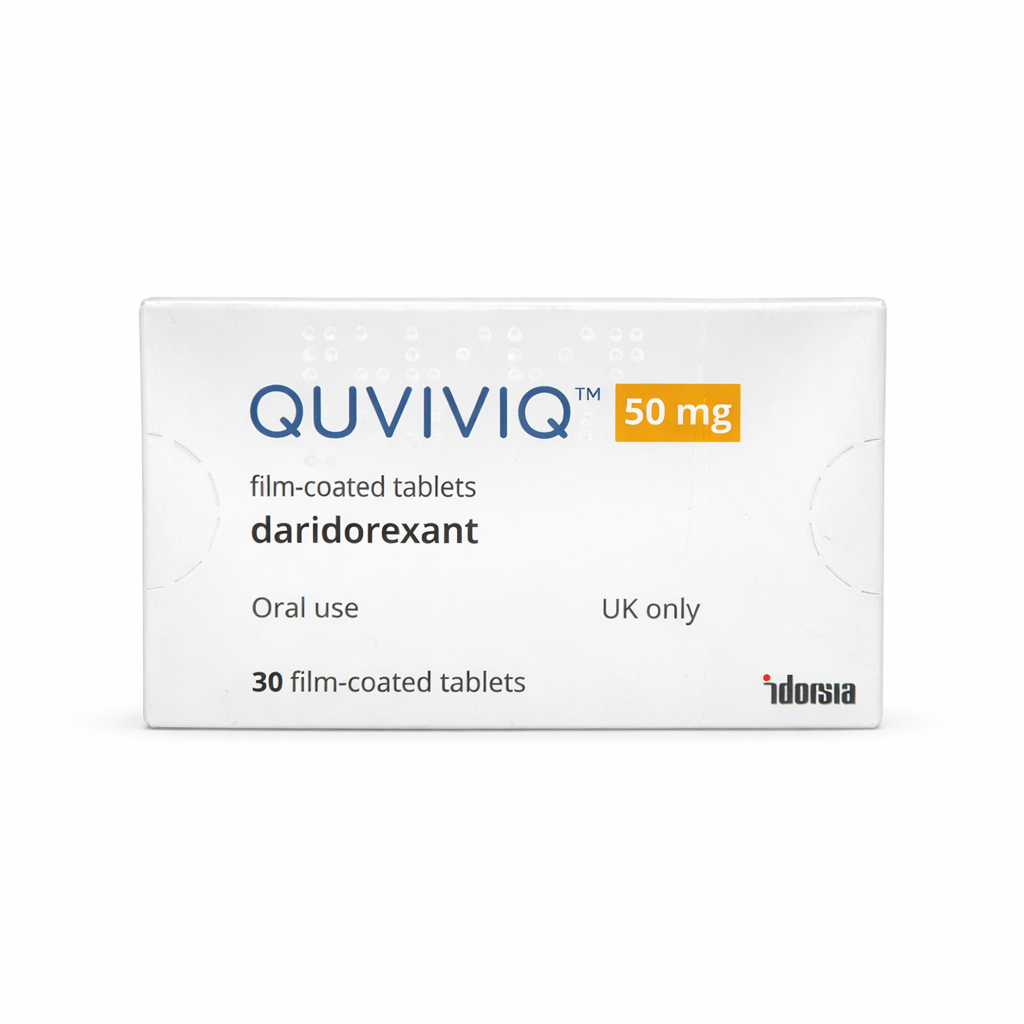
Daridorexant belongs to a class of medicines called dual orexin receptor antagonists. It works by calming the brain’s “wakefulness signal,” helping reduce excessive alertness at night. This allows you to fall asleep more easily and stay asleep longer. It is sold under the brand name Quviviq and is a prescription-only medicine approved for adults with chronic insomnia.
Chronic insomnia is defined as sleep difficulties that have lasted at least three months and significantly affect your daytime life. People who may benefit from daridorexant often experience tiredness, trouble concentrating, or difficulties managing work and daily tasks.
Not everyone with insomnia is suitable for this medication. A qualified prescriber will review your medical history, current medications, and symptoms before deciding if daridorexant is right for you. In some cases, non-drug approaches or further assessment for other health conditions may be recommended.
You may be considered for daridorexant if you meet all of the following criteria:
The usual adult dose is 50 mg once nightly, taken within 30 minutes of going to bed. Some patients may be prescribed 25 mg based on liver function, other medications, or clinical judgment.
Daridorexant can be taken with or without food, though taking it immediately after a large meal may slow its effects. If you forget a dose at bedtime, skip it and take your next dose at the usual time rather than taking it later in the night.
Most people tolerate daridorexant well. Common side effects may include headache, drowsiness, dizziness, nausea, or fatigue. Less commonly, people may experience sleep paralysis, unusual dreams or nightmares, sleepwalking, or allergic reactions such as rash.
Because daridorexant reduces wakefulness, it is important to avoid driving or operating machinery for at least 9 hours after taking it, especially when first starting treatment. Alcohol should also be avoided, as it can increase drowsiness. This medicine is not suitable during pregnancy or breastfeeding due to potential risks to infants.
Treatment should be as short as possible ( around 3 months) and stopped if insomnia does not improve. Patients who respond well can work with their prescriber on a long-term sleep management plan. Regular monitoring ensures that the treatment is safe and effective.
Our online clinic offers a clinician-led pathway that meets UK safety standards for remote prescribing. You complete a structured questionnaire, which is reviewed by a qualified prescriber. Prescriptions are provided only when clinically appropriate and safe, giving you a convenient, confidential, and professional experience from home.
Most people notice improved sleep within the first few nights, though full effects may take a week or more.
No. Alcohol can increase drowsiness and make next-day tiredness worse.
Avoid driving or operating machinery for at least 9 hours after a dose, especially when first starting treatment.
Treatment is usually short-term but it is safe to continue long term under the care of your clinician
Always inform your prescriber about your medical history and any medications you take. Some conditions or drugs may make daridorexant unsuitable.
Skip the missed dose and take your next dose at the usual time. Do not take extra medicine to make up for it.


This page has been written by a registered UK pharmacist and reviewed by our clinical team to ensure it is accurate, clear and reflects current clinical guidance.
Last medically reviewed: 06 July 2026
Last updated: 06 July 2026