1. Can I use Anusol Ointment during pregnancy or while breastfeeding?
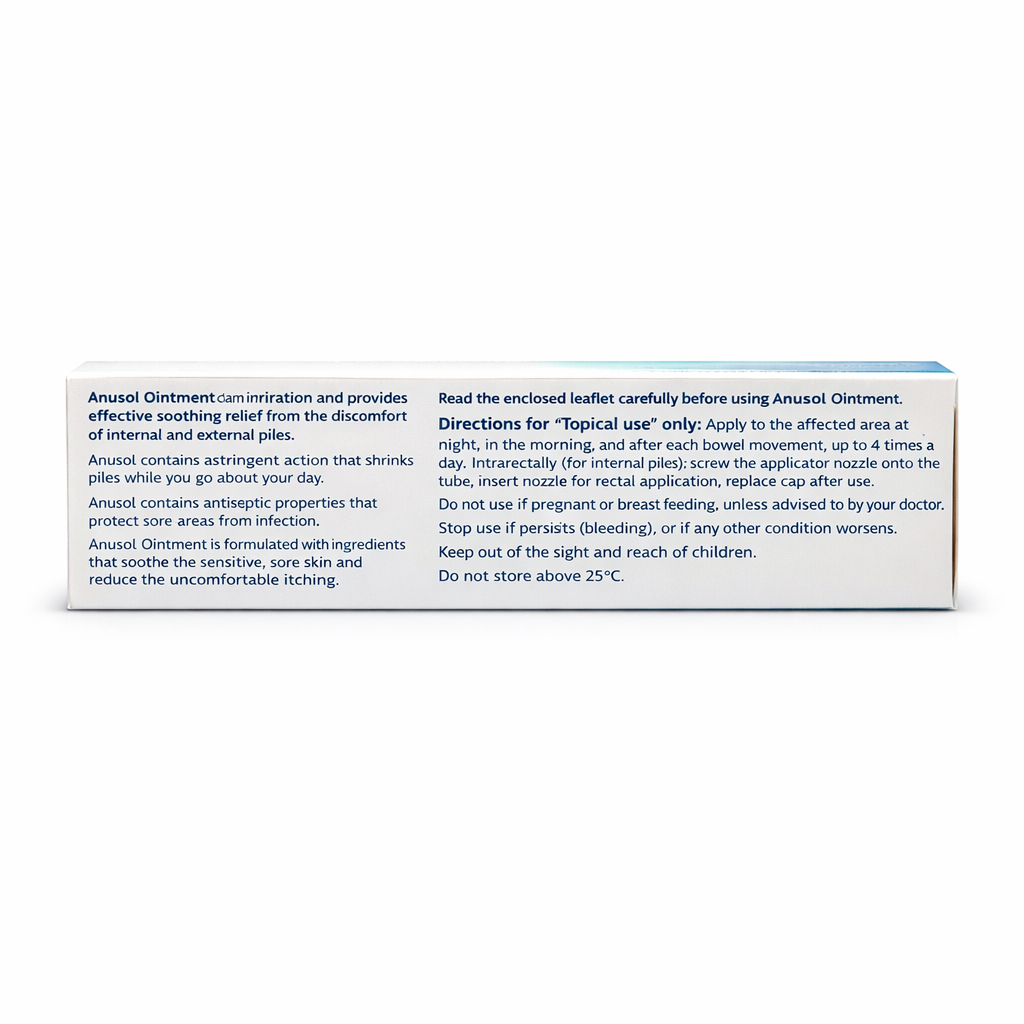
Speak to your doctor or pharmacist before using this product if you are pregnant or breastfeeding.
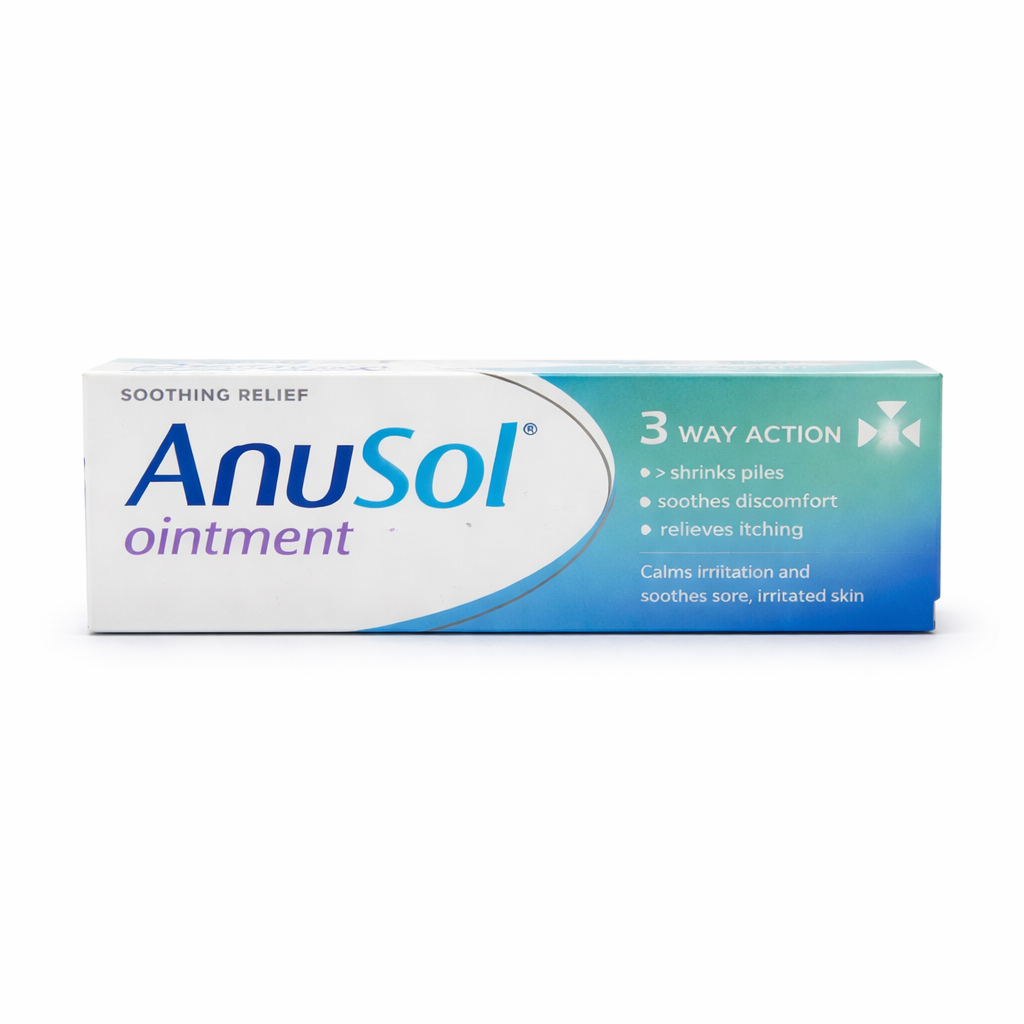
Anusol Ointment is a treatment that is applied to the skin around the back passage or gently inside it. It is used to treat both internal and external piles. It helps relieve itching, reduce inflammation, and soothe soreness in the affected area. It can also help protect the skin and support the healing of small tears around the anus.
Anusol Ointment may also be used after anorectal surgery to help calm and protect the area while it heals.
It can be used to treat:
Anusol Ointment can also be used to help with healing after anorectal surgery.
Active ingredients:
Anusol Ointment is suitable for adults and the elderly suffering from symptoms of piles.
It is not recommended for children under 18 years old unless advised by a healthcare professional.
Apply the ointment in the morning and at night, and after each bowel movement.
For external piles:
For internal piles:
Wash your hands before and after applying the ointment.
Like all medicines, Anusol Ointment can cause side effects, although not everybody gets them.
Possible side effects may include:
Stop using the ointment and seek medical advice if:
Place Your Order
Add the product to your basket and complete your purchase in just a few clicks.
Approved by Pharmacy Team
As a general sale product, no prescription is required. You can purchase directly.
Discreet Delivery
Your item is shipped quickly in plain, unbranded packaging for your privacy.
Speak to your doctor or pharmacist before using this product if you are pregnant or breastfeeding.
Anusol Ointment is usually applied morning and night, and after each bowel movement, unless you have been told otherwise by a healthcare professional.
Yes, Anusol Ointment can be used for both internal and external piles. The nozzle provided can be used for internal application.
Seek medical advice straight away if the ointment is swallowed, especially if you feel unwell.
You should speak to a doctor if your symptoms do not improve after 1 to 2 weeks, if they get worse, or if you notice bleeding, severe pain, or unusual changes.